Table Of Content
Nonetheless, for UX designers, it’s a call to take into account the way the elements of a design are presented on a screen. These elements should be laid out and sized in a way that enables all users to touch, click or manipulate them. While the legal requirements of the Americans with Disabilities Act (ADA) are typically met in public spaces like parks, plazas, streets, and gardens in the United States, these requirements are a minimum standard for accessibility. This course will help you achieve exactly that—from handling images to getting the most out of ARIA markup, you’ll learn how to approach accessibility from all angles. You’ll gain practical, hands-on skills that’ll enable you to assess and optimize for common accessibility issues, as well as show you how to place an emphasis on the quality of the user experience by avoiding classic mistakes.
Design Example: Use strong color contrast to avoid stigmatizing users with color blindness
How can educators design instruction to maximize the learning of all students? How can employers create environments to maximize productivity of all employees? How can IT professionals procure and develop products that are accessible to and useable by everyone? How can student services make their offerings inclusive of everyone? A number of proactive approaches discussed in the literature consider a broad audience in design practices. They include universal design, accessible design, barrier-free design, usable design, inclusive design, and design for all.
Your Guide to Hamburger Menus
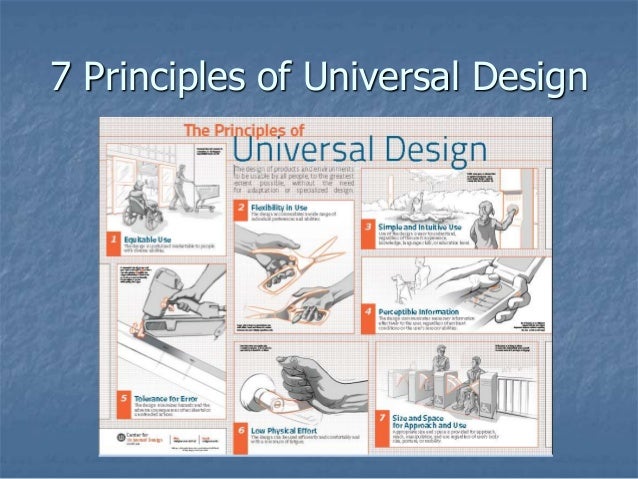
The IDeA Center’s activities are based on the philosophy of inclusive design, often called universal design or design for all. The design is useful and marketable to people with diverse abilities. For example, a counter space or desk surface may be raised or lowered to accommodate users of varying height, or an individual who uses a wheelchair. Universal design is a framework for the design of living and working spaces and products benefiting the widest possible range of people in the widest range of situations without special or separate design.
Principles of UDL
Universal Design for Learning Archives - eSchool News
Universal Design for Learning Archives.
Posted: Tue, 06 Dec 2022 01:10:42 GMT [source]
As of July 2015, as many as 157 countries had ratified the Convention and 159 countries had signed it. Simple and intuitive use is one of the goals of user experience design. It’s not surprising this is also one of the universal design principles. This principle aims to reduce complexity and mental or cognitive loads. According to the cognitive load theory, humans can handle only 3–9 items in a short amount of time when processing information. So as to reduce complexity and reduce cognitive loads, you should always aim to present information between 3 and 9 items.
Minimal Physical Effort
That way, you’ll gain deep insights into their diverse needs and experiences. With a comprehensive understanding of these user needs, you can start to build towards your design. You’ll be able to accommodate a broad range of experience, knowledge, language, and skills.
Guidelines for Tolerance for Error
The principles were created to guide a wide range of design disciplines including environments, products, and communications. You can apply these principles to any design style or trend; they are timeless and adaptable. You will be proactively taking on accessibility by incorporating these principles at the beginning of a project. Include semi-structured interviews and usability testing in your in-depth UX research. Be sure to involve individuals from different backgrounds, abilities, and cultures.
Designs should eliminate or de-emphasize anything that could lead to issues during use. When errors do occur, warnings or other safeguards should ensure a user can undo them or stop the error before it happens. For example, when a user goes to the website or app for a streaming service, they should immediately understand how to navigate to the video they want. This may mean that the most popular titles are easily accessible at the top of the home page, or if the user is looking for something more obscure, the search button is large enough to notice and access.
7 Principles to Attract and Retain Older Frontline Workers - HBR.org Daily
7 Principles to Attract and Retain Older Frontline Workers.
Posted: Fri, 16 Dec 2022 08:00:00 GMT [source]
Google’s Gmail offers an Undo feature; for a few seconds, users can recall messages. Note how the diagonally-cut gradient of the ramp affords a gentle slope for wheelchair users and anyone else who may need it, such as someone with a suitcase on wheels. This publication is based upon work supported by the National Science Foundation and the U.S. Any opinions, findings, and conclusions or recommendations expressed in this material are those of the author(s) and do not necessarily reflect the views of the federal government. To order free publications or newsletters use the DO-IT Publications Order Form; to order videos and training materials use the Videos, Books and Comprehensive Training Materials Order Form. Definitions are provided for unusual words, phrases, idioms, and abbreviations.
It’s also enlightening, however, to take a step back and explore some of the broader concepts of good, inclusive design that affects both the physical and virtual worlds. The design of products and environments to be usable by all people, to the greatest extent possible, without adaptation or specialized design. Errors are inevitable amongst humans, hence the adage “to err is human”. While we are not designing for nuclear technology, we should design for an error-friendly environment. Universal Design aims to design for all users—as well as design in anticipation for different environments and users’ actions; this principle pushes you to think beyond the screen and how the system and user will interact with each other.
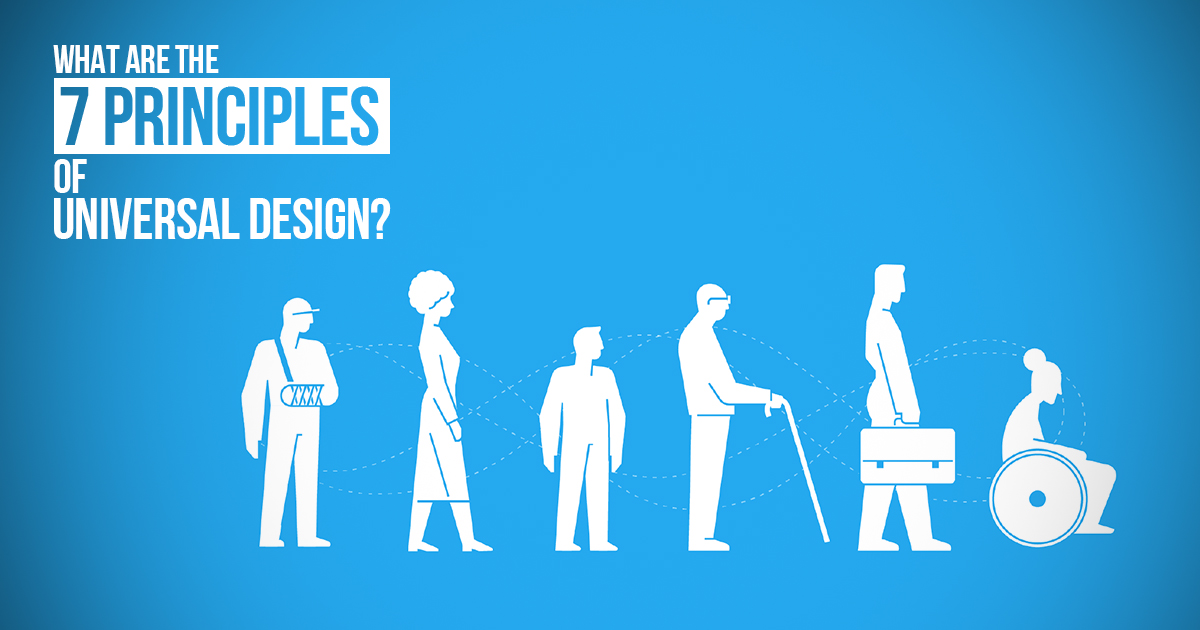
This means the design caters to people with a wide range of abilities, ages, backgrounds, physical and cognitive abilities. For digital spaces, this means that websites, apps and digital assets can be accessed by everyone. This could involve providing features like text-to-speech for visually impaired users or different font sizes and color contrasts to ensure that text, audio or visuals are presented in multiple ways. Federal agencies are responsible for developing accessible information and communications technology (ICT) tools, products and websites. Adopting universal design principles can help your agency address and improve accessibility in areas such as digital strategy, procurement, and design and implementation of digital products. The Principles of Universal Design is a foundation for designers who set out to create Universal Design products.
One of the common myths about accessibility is if you design for accessibility, then you would be sacrificing the visual design. A design with strong color contrast can be aesthetically appealing to all users. Provide clear and concise labels, headings, and instructions to guide users through the interface. Google’s iconic website is an example of universal functionality that accommodates an extremely wide user base with such customizable options as Dark Mode.


No comments:
Post a Comment